



Please Don’t Buy the Teacher Another Mug
A teacher’s desk fills up with mugs, ornaments and chocolates by the end of term. Here’s what actually makes a good gift, and why a specific thank-you often wins.

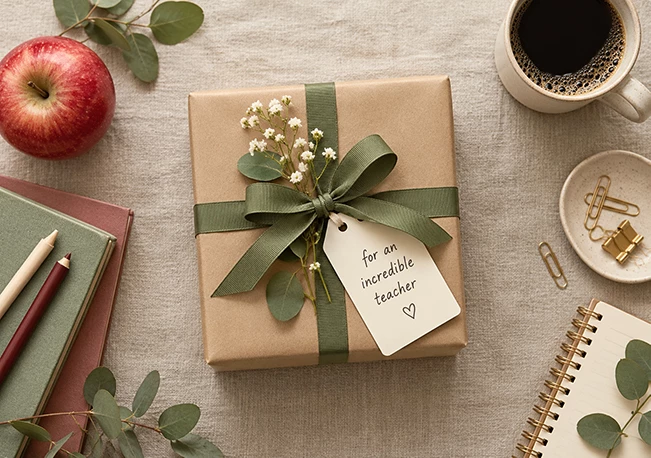
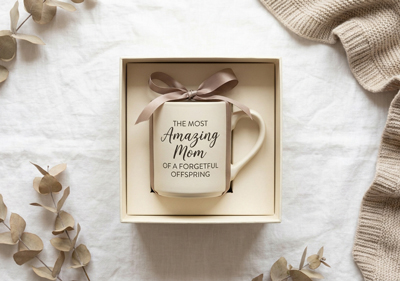
Around the last week of the school year, a teacher’s desk starts to look like the world’s most sentimental lost-and-found box. Mugs insisting that teachers shape the future. Apple-shaped ornaments, in case anyone worried the teacher might forget what they do for a living. Little boxes of chocolates stacked up like they’re waiting for customs clearance. Cards from children who genuinely want to say thank you. It’s all very sweet, until you remember that this happens every year, sometimes several times a year, and that teachers have limited cabinet space at home like the rest of us.
What do you do with twelve mugs? Or another plaque about changing lives? You can’t tell a child their gift has nowhere to go, so you smile, say thank you, and figure it out later. That’s the tricky part of teacher gift-giving. Parents want to show appreciation, but the gifts don’t always make life easier for the people receiving them. Sometimes they just add another pile to sort through.
The irony is that many of the same parents who buy generic teacher gifts will agonize over presents for everyone else on their list. It’s 11 p.m., you have fourteen browser tabs open, and you’re comparing two notebooks that differ only in the shade of green on the cover. You’ve read a stranger’s review of a pen. You’ve watched a video about paper weight. Somewhere along the way you started wondering whether green sends the wrong message, even though the person you’re buying for would have been happy with any decent notebook and a kind word. As our guide to avoiding overthinking gift decisions explains, finding something meaningful doesn’t take endless research. Yet when we shop for a child’s teacher, someone we mostly know in a professional role, we swing from overthinking straight to autopilot. That’s how we end up with all those mugs.
The mug makes sense at first. Teachers run on coffee and tea, and a mug with a funny slogan feels like a safe choice when you don’t know much about their life outside the classroom. That’s the problem. We’re buying something that says teacher rather than something that says I paid attention to you. We do this across every category of gifting. Home cooks get garlic slicers they never use, and anyone who reads ends up drowning in leather bookmarks. We latch onto a hobby or profession and assume we’ve found the answer, which usually means buying something they already own three times over.
Stepping off autopilot doesn’t require a major investigation. Even in the final week of the school year, it takes a minute or two to jot down what you’ve actually observed: the drinks on their desk, the books they recommend, the small interests they mention at pickup. A short list like that is usually enough to steer you away from the novelty aisle and toward something that fits.
Psychologists have studied why well-intentioned givers keep making this mistake. It’s closely tied to the empathy gap in gift-giving: givers and recipients view a present across different timelines. Givers focus on the moment of exchange, picking something symbolic that looks unmistakably like a “teacher gift” when it’s handed over. Recipients live with what happens after the tissue paper comes off. So before buying another classroom-themed novelty item, ask yourself whether you would buy this for this particular person if the word teacher weren’t printed on it. If not, keep looking. If so, ask a second question: what happens to this object once it leaves my hands?
Unwanted gifts don’t always get thrown away right away. Some sit in cupboards for months before migrating to a donation box, alongside the usual suspects: novelty stationery, decorative ornaments, heavily scented candles, and trinkets that look charming on a shelf but have no clear purpose at home. That isn’t because teachers are ungrateful. There’s only so much room for things they never needed. Some gifts also carry awkward social pressure. A decorative piece can feel like something the teacher is expected to display on their desk, while something intimate like perfume or jewelry can cross unspoken professional boundaries. We’ve written before about why personal gifts can backfire, and the tension applies directly to classrooms: putting thought into a present doesn’t guarantee the recipient will experience it as comfortable.
One of the few things that never creates a storage problem or an awkward boundary is a handwritten note. It’s easy to assume that someone who spent a year teaching your child deserves an impressive physical object. In practice, a specific, sincere card often outlasts anything you can buy. Instead of “Thank you for being a wonderful teacher,” tell them how they helped your child gain confidence, made reading enjoyable, or encouraged them to keep trying when a subject got hard.
A specific note proves you noticed their actual work. Research on the effort heuristic in gift-giving shows that people appreciate the effort behind a present, but that effort only lands when it serves the recipient. Hours spent hunting down an elaborate gift mean less than paying attention to what makes a teacher’s workday easier. A costly present can also put a teacher in an awkward spot. Many public school districts and state ethics rules cap the dollar value of gifts school employees can accept, so a modest gesture paired with a thoughtful note is almost always the wiser choice.
When you do want to include something physical, start with everyday utility. A paperback by an author they’ve mentioned in passing is both safe and personal. If they’re always hunting for a working pen, a pack of the exact everyday pens they already use beats an expensive commemorative one they’ll be afraid to lose in a desk drawer. If they always have a travel mug in hand, a bag of good coffee beans or loose-leaf tea will be used up and enjoyed, which is more than can be said for a twelfth ceramic mug. The same goes for a favorite snack you’ve seen on their desk, or classroom staples they burn through constantly, like quality dry-erase markers, sticky notes, or a sturdy notebook for lesson planning. Acknowledging the subject they teach can work, too, as long as you skip the novelty slogans. For gifts for a history teacher, a well-researched biography or a small desk object tied to the era they love teaching respects their actual intellectual interest rather than just stamping a slogan on something. And if it has to be apparel, make it something with some charm, like a Super History Teacher hoodie.
If you don’t know the teacher’s tastes, there’s no need to guess. A gift card lets them choose what they actually want, and picking a local spot (a neighborhood bookstore, a coffee shop near the school, an independent stationery store) feels more considered than a generic card. Food is another reliable option if you keep allergies and dietary restrictions in mind. Sealed, clearly labeled treats that can be shared in the teachers’ lounge spare one person from finishing an entire box of pastries alone. You can also check whether other parents are pooling funds for a single class gift, which is a sensible alternative to twenty-five separate tokens.
There’s a reason minimalist gifts can feel more premium. One useful, well-made item or consumable paired with a note feels more generous than a gift bag padded with cheap filler. It also keeps the exchange light. Gifts can carry unspoken expectations when we’re quietly looking for reassurance that we chose well, and the social contract of gift-giving breaks down whenever an exchange leaves the recipient feeling indebted or pressured. The recipient shouldn’t have to perform gratitude.
Teachers spend nine months paying obsessive attention to thirty kids at once. The kindest gesture in June is simply showing that you noticed, without making them haul another ceramic dust-collector to their car.

Article Sources
1. Teigen, K. H., Olsen, M. V. G., & Solås, O. E. (2005). Giver-receiver asymmetries in gift preferences. British Journal of Social Psychology, 44(1), 125-144. https://doi.org/10.1348/014466604X23428

Dattaraj Pai
I’m the founder of Science of Gifts, a website dedicated to helping people find meaningful and thoughtful gifts. With years of experience researching the psychology of gift-giving, I explore how gifts communicate emotions, strengthen relationships, and create lasting memories.
Beyond writing about gifts, I have a background in storytelling and filmmaking, which fuels my passion for exploring the cultural impact of meaningful gestures.