



How to Choose a Gift for a History Buff (That They’ll Actually Use)
History lovers rarely want the same thing—and they almost certainly own the book you’re thinking of buying. Here is how to match a gift to the way they actually engage with the past.

Most people buying a gift for a history buff start and end with the subject itself. Something Roman, something medieval, a thick biography of a nineteenth-century president, a map with artificially aged edges. The logic seems sound: find out which century they care about and hand them an object with that century’s name on it.
In practice, it hits a snag right away. Anyone whose interest runs deep enough that friends and family think of them as “the history person” has spent years collecting the obvious stuff. If a major biography on their favorite period came out six months ago, there’s a very good chance it’s already on their nightstand. Or worse, they’ve read it and formed strong opinions about the author’s footnotes.
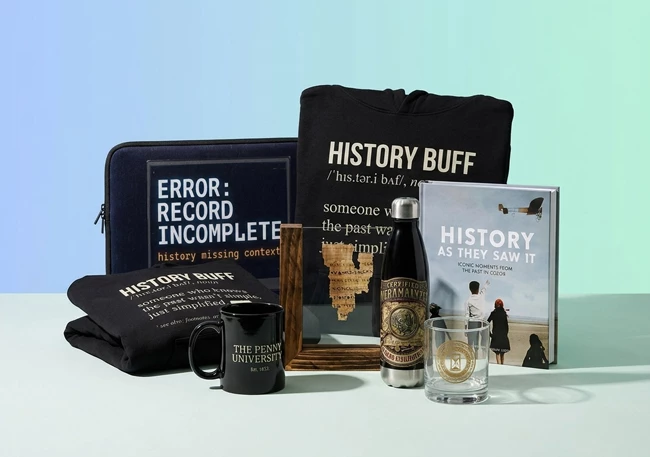
What gets missed when we shop strictly by era is how that person actually relates to the past. For most enthusiasts, history isn’t trivia and it isn’t a decorative theme. It’s a lens for looking at the world, a set of daily reading habits, and a particular curiosity about why people keep making the same decisions across different centuries. If you want ready-made inspiration, our curated collection of gifts for history buffs has original designs built around classical maxims, archival humor, and the eras historians care about most. The real trick, though, is knowing which angle will land with the person on your list.
Start by noticing whether their interest is driven by ideas and primary sources or by one specific period. Some readers roam constantly, Bronze Age trade routes one month, seventeenth-century Enlightenment coffeehouses the next. What holds their attention isn’t a single battle or empire. It’s the work of piecing together how people thought and argued. For that kind of reader, a gift that nods to the intellectual history of everyday life beats a generic textbook motif. In seventeenth-century England, for instance, coffeehouses charged a penny for admission and a cup of coffee, which gave anyone inside access to pamphlets, newspapers, and hours of philosophical debate. They became known as “penny universities.” Putting that reference on something as ordinary as a morning mug, like our Penny University Coffeehouse Mug, turns a daily routine into a quiet nod to intellectual history, and nobody in the room needs the joke explained.
That balance between recognition and restraint is where most themed gifts go wrong. As we’ve explored in our guide to why minimalist gifts often feel more premium, objects that shout their theme in loud graphics wear out their welcome fast. They look unmistakably like a “history gift” for the five seconds it takes to unwrap them, then spend the next three years at the back of a cupboard. Compare that with an object that belongs in the room first and carries its historical reference second. A heavy-bottomed rocks glass inscribed with Cicero’s line “Historia Magistra Vitae” (“History is life’s teacher”) doesn’t read as a novelty. The Historia Magistra Vitae Whiskey Glass works because it fits the way many history readers actually spend their evenings, unwinding slowly with a book nearby. A classicist will catch the Latin immediately. Everyone else just sees a well-chosen piece of glassware.
Not every history lover approaches the subject with solemn gravity, of course. Plenty of enthusiasts, especially teachers, graduate students, and podcast devotees, have a healthy sense of irony about how much time they spend thinking about people who’ve been dead for two thousand years. They’re the ones who pause a historical drama ten minutes into the first episode to check whether that treaty was really signed in that city. When you’re shopping for someone with that self-aware streak, humor works remarkably well, as long as the joke comes from inside the subject instead of mocking it from outside. A shirt like the I Paused Netflix to Read a Primary Source T-Shirt or the Certified Overanalyzer of Dead Civilizations Tee works because it names an exact habit every serious history nerd recognizes in themselves. It reflects who they are as a reader and researcher rather than shrinking their interest to a cartoon historical figure.
The same principle applies to people whose habits lean toward writing, teaching, or organizing research. Historians accumulate notes constantly, whether they’re outlining a lecture, tracking family genealogy, or jotting down the next title to read. A notebook or a useful desk companion, like the Same Mistakes, Different Century Spiral Journal or the archival ERROR: RECORD INCOMPLETE Laptop Sleeve, respects how they spend their days. Choosing gifts based on lifestyle rather than just interests is almost always the safest way to make sure a present actually gets used.
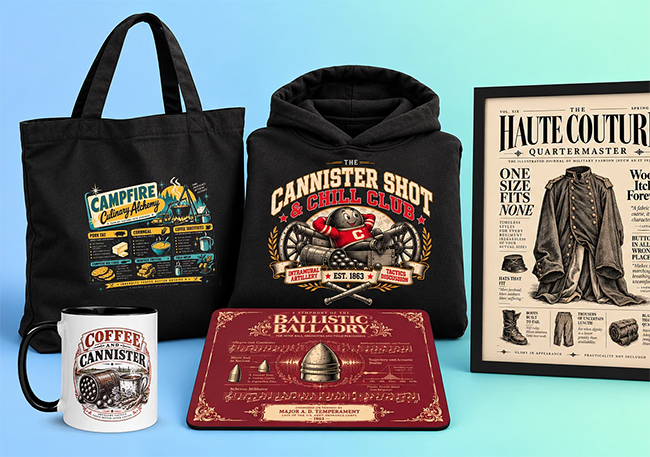
What if the person you’re shopping for really is devoted to one era above all others? Then broad philosophical references take a back seat to period detail. Someone who spends their weekends reading about nineteenth-century American battlefields or twentieth-century aviation has a very specific visual vocabulary in mind. For American Civil War and presidential history buffs, look for pieces rooted in primary documents, period maps, or nineteenth-century material culture. You can read our essay on what makes a good gift for a Civil War enthusiast, or browse our dedicated Civil War gift guide and Abraham Lincoln gift collection. For World War II and aviation enthusiasts, focus on mid-century engineering, aircraft illustration, or wartime statesmanship, such as the Churchill “Suspected of Winning” Desk Mat or the picks in our WWII gifts guide. For classical antiquity and mythology lovers, whose shelves are full of Homer, Ovid, or histories of the Mediterranean, architectural prints like Roma: Urbs Aeterna or our Greek mythology gifts guide offer plenty of classical symbolism without feeling like a costume. And for history teachers and professors, keep classroom storage limits in mind. As we noted in our piece on what to give a teacher, practical classroom gear or our curated history teacher gifts beat generic apple ornaments every time.
Ultimately, you don’t need a degree in historiography to buy a gift that impresses a history buff. You just have to resist the urge to buy something that tries to teach them a subject they already know by heart. Pay attention instead to where their interest shows up in their ordinary routine: the coffee mug on their desk, the hoodie they throw on for Sunday-morning reading, the wall above their bookshelves, the sense of humor they bring to a conversation about the past. Match the gift to the person first and the era second, and you end up giving them something better than another souvenir. You give them something they’ll keep reaching for.

Dattaraj Pai
I’m the founder of Science of Gifts, a website dedicated to helping people find meaningful and thoughtful gifts. With years of experience researching the psychology of gift-giving, I explore how gifts communicate emotions, strengthen relationships, and create lasting memories.
Beyond writing about gifts, I have a background in storytelling and filmmaking, which fuels my passion for exploring the cultural impact of meaningful gestures.